
Was bedeutet Neuroplastizität bei Parkinson wirklich?


Einleitung

Der Begriff Neuroplastizität wird bei Parkinson häufig verwendet. Gemeint ist die Fähigkeit des Gehirns, sich anzupassen und neue Verbindungen zu bilden. Viele Betroffene fragen sich, ob Lernen trotz Parkinson noch möglich ist. Die Antwort lautet: Ja – Neuroplastizität ist auch bei Parkinson vorhanden, benötigt jedoch gezielte Voraussetzungen.

Was ist Neuroplastizität?

Neuroplastizität beschreibt die Fähigkeit des Gehirns,

  • neuronale Verbindungen zu verändern,
  • neue Netzwerke aufzubauen,
  • Funktionen teilweise neu zu organisieren.

Diese Fähigkeit besteht ein Leben lang, kann bei neurologischen Erkrankungen jedoch eingeschränkt sein.
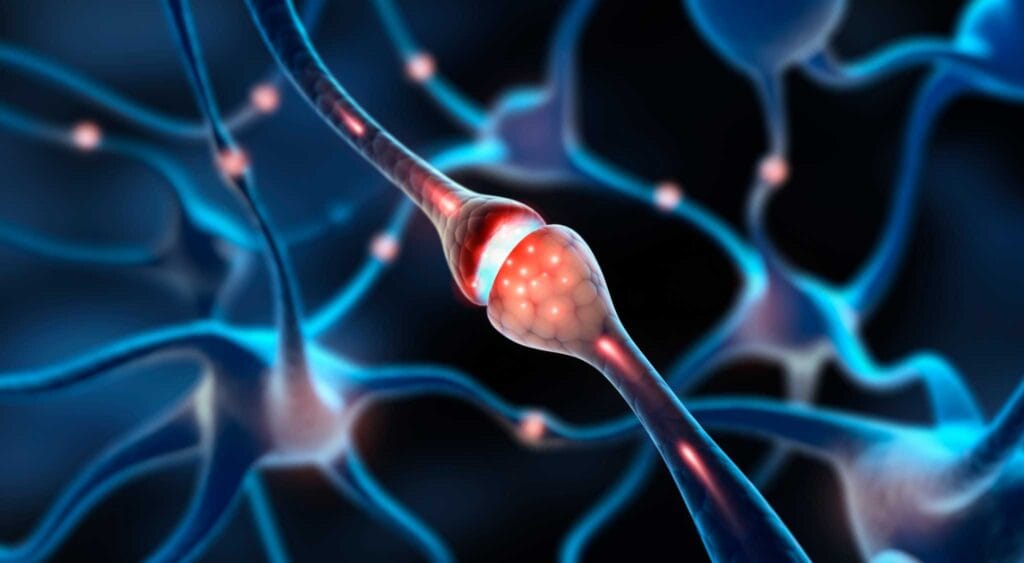
Neuroplastizität bei Parkinson

Bei Parkinson kommt es zu einem Verlust dopaminerger Nervenzellen. Dopamin ist wichtig für Bewegungssteuerung und motorisches Lernen. Dadurch werden Bewegungen weniger automatisch und Lernprozesse verlangsamt.
Wichtig:
 Die Lernfähigkeit geht nicht verloren, sie benötigt jedoch gezielte Reize.

Warum Bewegung allein oft nicht genügt

Regelmäßige Bewegung ist wichtig, reicht jedoch häufig nicht aus. Gleichförmige Wiederholungen oder passives Üben erzeugen meist keinen ausreichenden Lernreiz.

Wie gezieltes Training helfen kann

Aufgabenorientiertes, abwechslungsreiches Training kann neuroplastische Prozesse fördern. Besonders wirksam sind:

  • Koordinations- und Gleichgewichtstraining
  • bewusste Bewegungsausführung
  • individuell angepasste Anforderungen

Entscheidend ist die Qualität des Trainings, nicht die Dauer.

Fazit

Neuroplastizität ist auch bei Parkinson möglich, jedoch nicht automatisch.
 Gezieltes, strukturiertes Training ist entscheidend, um Lernprozesse im Gehirn zu unterstützen. Wie zum Beispiel mit der GIGER® MD® Therapie.

Autor: Combo AG, Hersteller und Vertreiber der GIGER® MD® Therapie
Medizinischer Hinweis: Dieser Beitrag dient der Information und ersetzt keine ärztliche Beratung.
Letzte Aktualisierung: 2026

What does neuroplasticity really mean in Parkinson's disease?


Introduction

The term neuroplasticity is often used in Parkinson’s disease. It refers to the brain’s ability to adapt and form new connections. Many people with Parkinson’s wonder whether learning is still possible despite their condition. The answer is yes—neuroplasticity is also present in Parkinson’s disease, but it requires specific conditions.
What is neuroplasticity?
Neuroplasticity describes the brain’s ability to

  • change neural connections,
  • build new networks,
  • and partially reorganize functions.

This ability lasts a lifetime, but can be limited in neurological diseases.

Neuroplasticity in Parkinson’s disease
Parkinson’s disease causes a loss of dopaminergic nerve cells. Dopamine is important for movement control and motor learning. This makes movements less automatic and slows down learning processes.
Important: The ability to learn is not lost, but it requires specific stimuli.
 
Why exercise alone is often not enough
Regular exercise is important, but it is often not enough. Uniform repetitions or passive practice usually do not generate sufficient learning stimuli.

How targeted training can help
Task-oriented, varied training can promote neuroplastic processes. The following are particularly effective:

  • Coordination and balance training
  • Conscious execution of movements
  • Individually tailored requirements

The quality of the training is crucial, not the duration.
 
Conclusion
Neuroplasticity is also possible with Parkinson’s disease, but it does not happen automatically. Targeted, structured training is crucial to support learning processes in the brain. For example, with GIGER® MD® therapy.

 
Author: Combo AG, manufacturer and distributor of GIGER® MD® therapy
Medical 
note: This article is for informational purposes only and does not replace medical advice.
Last update: 2026