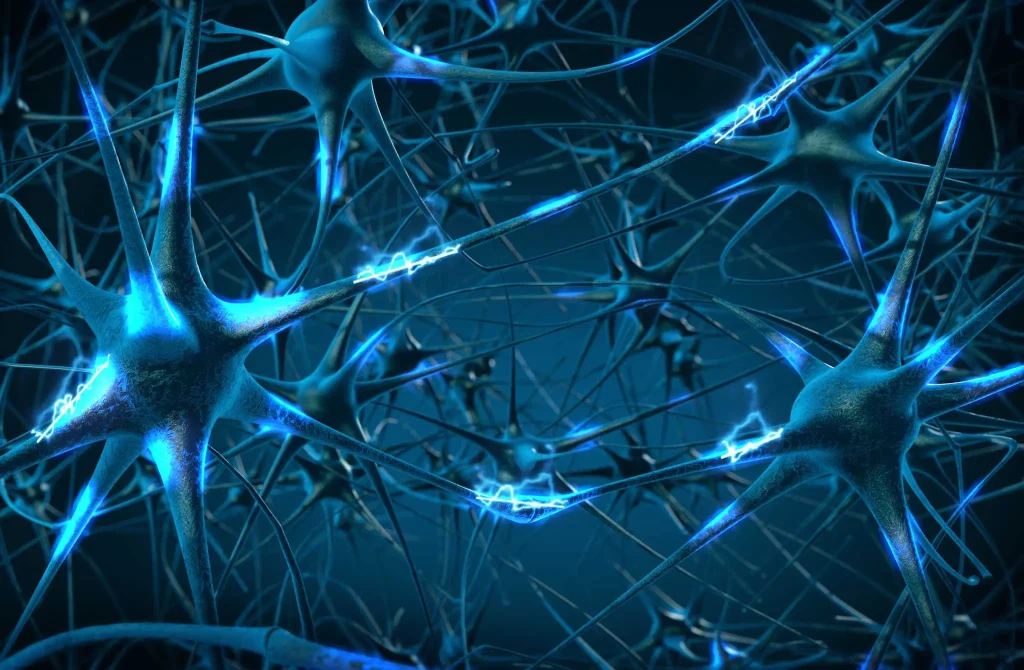
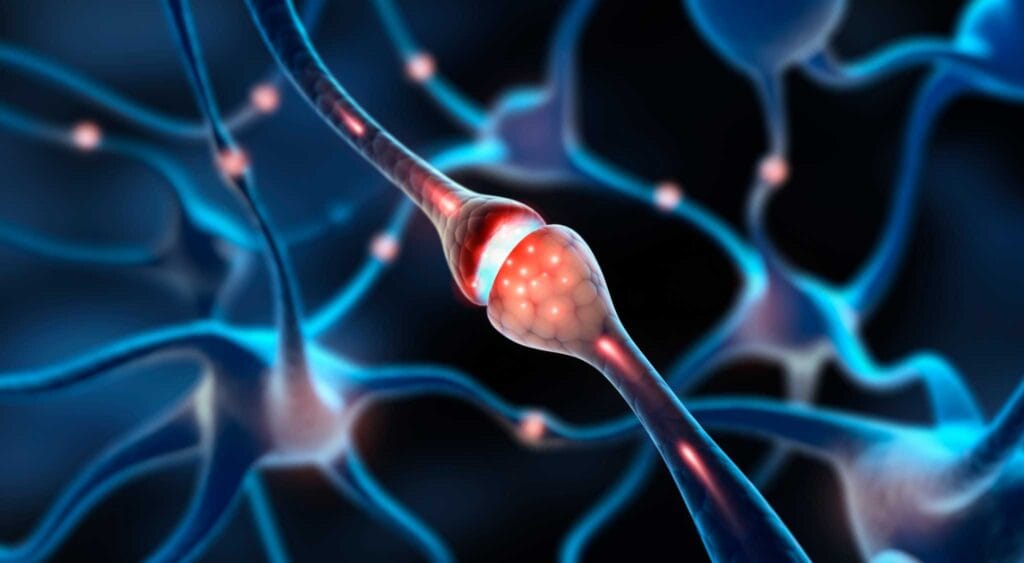
Parkinson’s disease is caused by the failure of a specific group of nerve cells in the brain. These cells are responsible for producing the neurotransmitter dopamine. Dopamine is crucial for smooth, coordinated movements, the regulation of muscle tone, and overall motor function. If the amount of dopamine decreases, the typical movement disorders associated with Parkinson’s occur. The underlying mechanisms that lead to the cessation of dopamine production are still not fully understood.
The most common form of the disease is idiopathic Parkinson’s, in which no clear cause can be identified. This form is distinguished from parkinsonism, where the symptoms can be traced back to specific triggers such as medications or other illnesses. Genetic factors are considered a contributing factor, but so far no single gene has been identified as directly responsible for the development of idiopathic Parkinson’s.
Research shows that nerve cell damage and dopamine loss can begin years before the first symptoms appear. Only when a significant portion of the dopaminergic system is impaired—estimates suggest about 80% dopamine loss in the striatum—do the symptoms become clinically noticeable. The period between the onset of neurodegenerative processes and the visible onset of the disease is currently estimated at about five years.
Some affected individuals associate the onset of the disease with traumatic events such as accidents, surgeries, or severe emotional stress. However, the neurological community points out that such events are not the cause of Parkinson’s, but may possibly bring out already existing symptoms earlier. The vast majority of people who experience traumatic events do not develop Parkinson’s disease.
In addition to the idiopathic form, there are also secondary parkinsonian syndromes, in which certain medications disrupt dopamine metabolism in the brain. Long-term use of such medications can cause Parkinson-like symptoms.
From a neuropathological perspective, Parkinson’s disease is characterized by the progressive loss of dopamine-producing, neuromelanin-containing nerve cells in the substantia nigra, a central area of the basal ganglia, which play a key role in movement control, posture, and coordination. What is decisive for the course of the disease is less the loss of cells itself than the resulting disruption of the dopaminergic nigrostriatal signaling pathway, which ultimately leads to the typical motor symptoms.